
All posts by SEO Team

Subdivision Bonds for Developers: A Guide

Subdivision Bonds for Developers: A Guide

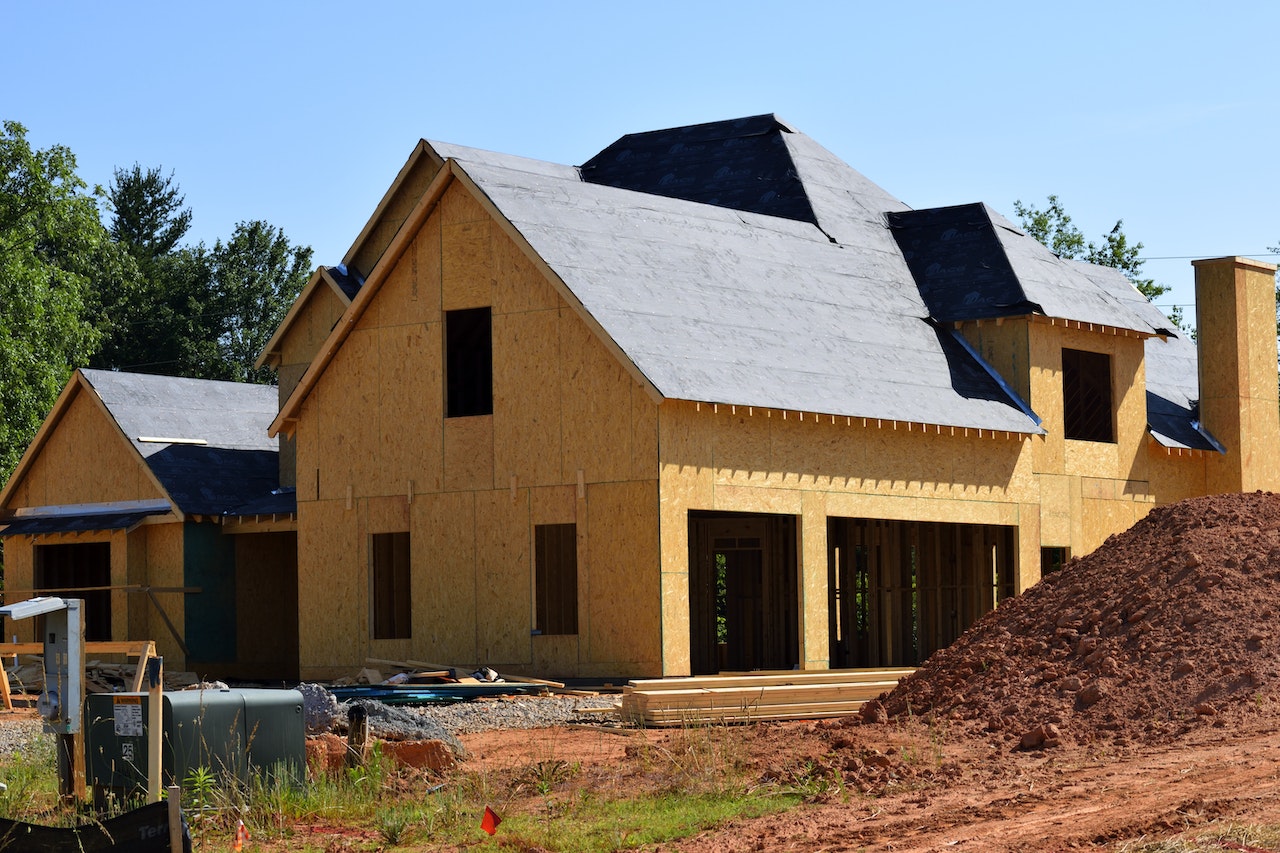
Surety Bond Professionals is a family owned and operated bonding agency with over 30 years of experience. With access to a broad range of surety markets, our expert agents are ready to assist with all of your construction bond needs. What Are Subdivision Bonds? A subdivision bond, also called a plat bond, developer bond, or completion bond, is a specialized type of performance bond guaranteeing that certain improvements will be made in a subdivision. Such improvements include streets, sidewalks, streetlights, curbs, gutters, sewers, water mains, fire hydrants, and more—anything considered to be public infrastructure. A subdivision bond guarantees these improvements will be completed and tied in with public infrastructure according to municipal code. The bond gives the municipal authority or other party requiring the bond (the “obligee”) a way to recover monetary damages from the developer (the bond’s “principal”) if the subdivision work is not completed satisfactorily. Who Needs a Subdivision Bond and Why? Developers, not contractors, are required to purchase subdivision bonds. A subdivision bond is needed when a developer divides a piece of land to build homes for individual sale. With a subdivision bond in place, the developer can go ahead and sell individual lots or homes...

Read more

Will Construction Costs Go Down in 2023?

Will Construction Costs Go Down in 2023?

Surety Bond Professionals is a family owned and operated bonding agency with over 30 years of experience. With access to a broad range of surety markets, our expert agents are ready to assist with all of your construction bond needs. A Burning Question It’s only natural for contractors to worry about the possible erosion of their profit margins due to unanticipated increases in construction costs. Bids based on today’s construction costs that would yield a certain profit today can turn out to be less profitable a few weeks or months down the line if those costs increase. So, it’s understandable that contractors, from independent operators to the owners of large construction firms, are eager for any information on the direction and magnitude of likely movements in construction costs. Questions such as will construction costs go down in 2023 are on everyone’s mind. Construction Cost Components In putting together estimates and budgets for potential construction jobs, contractors must include both direct and indirect costs. Direct costs are the cost of labor and the cost of construction materials. Contractors have little control over these. Sure, they might be able to negotiate supplier discounts here and there. And some might try to...

Read more
Top Women in Construction in 2023

Top Women in Construction in 2023

Surety Bond Professionals is a family owned and operated bonding agency with over 30 years of experience. With access to a broad range of surety markets, our expert agents are ready to assist with all of your construction bond needs. Women in Construction Today As of October 2022, the Bureau of Labor Statistics reported that 14% of the 7.7 million people working in the U.S. construction industry were female. The number of women in construction is increasing every year. As the construction labor pool continues to shrink with the aging of the construction workforce and the number of young people entering the trades declines, employers increasingly are hiring female candidates. And more women are launching their own construction businesses, though relatively few of them have annual revenues in excess of $500,000. Construction Champions Clearly, there is still plenty of room for growth for women in construction. Women with some construction experience are a valuable resource for bringing more women into the industry and helping them advance in their construction careers. Every year, Construction Dive selects from hundreds of nominees the women doing the most to elevate the industry and make it an attractive employment option for women. These are...

Read more
Guide to Commercial Construction Loans

Guide to Commercial Construction Loans

Surety Bond Professionals is a family-owned and operated bonding agency with over 30 years of experience. With access to a broad range of surety markets, our expert agents are ready to assist with all of your construction bond needs. Purpose of Commercial Construction Loans Few project owners can put up all of the capital to pay for a commercial building project without borrowing from a bank or other lender. There may be several different sources of funds, different layers in the “capital stack,” that go into financing a commercial building project—often a combination of equity and debt. While certain stakeholders and investors contribute equity, our concern here is with the commercial construction loans that constitute the debt portion of a project’s financing. A commercial construction loan is a business loan obtained by a project owner to finance the construction or renovation of a commercial structure. Sources of Commercial Construction Loans Up to $5 million in construction financing can be obtained through one of the Small Business Administration’s commercial construction loan programs: CDC/504 loans or SBA 7(a) loans. Many project owners prefer to finance construction with a commercial construction loan from a bank they have an established relationship with. Even...

Read more
Fire Resistive Construction Trends

Fire Resistive Construction Trends

Surety Bond Professionals is a family owned and operated bonding agency with over 30 years of experience. With access to a broad range of surety markets, our expert agents are ready to assist with all of your construction bond needs. Strategic Design for Fire Resistive Construction Years of drought in California brought the nation’s attention to the threat posed by wildfires. Of course, wildfires are not the only fire threat. Fires can originate inside structures as well. Certain design principles and fire resistive construction methods are employed today to keep the fire from gaining entry to a building and slow or halt its spread. In fire-prone areas, local building codes often mandate Type III-A protected combustible construction or better for new construction. Type III-A, according to the International Building Code, provides 2-hour fire resistance for exterior walls and 1-hour protection for the structural frame, floors, and ceilings. Keeping Fire Out The primary strategy for keeping fire out of a building is to deny it the fuel it feeds on. That requires the use of non-combustible materials on a building’s exterior. These include cement, steel, and masonry, among others. Windows and Skylights Fire-resistant construction requires heavy-duty glazing, which resists fire...

Read more
5 Construction Types According to Building Codes

5 Construction Types According to Building Codes

Surety Bond Professionals is a family owned and operated bonding agency with over 30 years of experience. With access to a broad range of surety markets, our expert agents are ready to assist with all of your construction bond needs. International Building Code (IBC) Categories The five IBC categories identify the level of fire protection provided by five types of construction. The construction type chosen for a structure determines important parameters such as the building’s: Permissible uses Maximum occupancy Square footage Proximity to other structures Placement of windows and exits Fire resistance Need for sprinklers Type I is the most stringent and Type V is the least stringent in terms of fire resistance. Additionally, each category is further designated as “A” or “B” for basic or enhanced protection. Construction Types & Building Codes Type I Construction Type I buildings are made of fire resistive and non-combustible materials (concrete and steel) and are rated as being able to resist fire for 2-3 hours. In general, high-rise and high-occupancy buildings are construction type I-A. Type I-A provides enhanced protection against fire—3 hours for exterior walls and structural frame, 2 hours for floor/ceiling assemblies, and 1.5 hours for the roof. Type I-B,...

Read more
Surety Bonds for Heavy Civil Engineering

Surety Bonds for Heavy Civil Engineering

Surety Bond Professionals is a family owned and operated bonding agency with over 30 years of experience. With access to a broad range of surety markets, our expert agents are ready to assist with all of your construction bond needs. What Do Civil Engineers Do? According to the U.S. Department of Labor, heavy and civil engineering is considered a subsector of the construction sector. The Occupational Outlook Handbook published by the Bureau of Labor Statistics describes the role of civil engineers as “[To] conceive, design, build, supervise, operate, construct and maintain infrastructure projects and systems in the public and private sector, including roads, buildings, airports, tunnels, dams, bridges, and systems for water supply and sewage treatment.” Their work is not normally performed on buildings but rather on infrastructure. IIJA and Heavy Civil Engineering The Infrastructure Improvement and Jobs Act (IIJA) was signed into law by President Biden on November 15, 2021. It authorized $1.2 trillion in funding for transportation and infrastructure projects, with $550 billion of that figure allocated for “new” investments and programs. The remainder is earmarked for repairs and upgrades to existing transportation and infrastructure systems. This level of funding creates unprecedented opportunities for heavy civil engineering...

Read more
IIJA Buy America Regulations Explained

IIJA Buy America Regulations Explained

Surety Bond Professionals is a family owned and operated bonding agency with over 30 years of experience. With access to a broad range of surety markets, our expert agents are ready to assist with all of your construction bond needs. What is the Build America, Buy America Act? The Build America, Buy America Act is part of the Infrastructure Investment and Jobs Act (IIJA), signed into law by President Biden on November 15, 2021. It set May 14, 2022, as the deadline for all federal agencies to make sure that the infrastructure projects they fund comply with the Build America, Buy America domestic preference requirements. In some cases, this means that the IIJA Buy America requirements will supersede earlier procurement guidelines. What Does “Domestic Preference Requirements” Mean? “Domestic preference” means that all construction materials used in IIJA-funded infrastructure projects must, with few exceptions, be made in the United States. The White House has clarified that to mean that at least the last two stages of the manufacturing process must occur in this country. IIJA domestic preference requirements apply only to construction materials. They do not apply to supplies or tools brought to a jobsite and removed before project completion...

Read more
How Safety Records Can Affect Your Bond Capacity

How Safety Records Can Affect Your Bond Capacity

Surety Bond Professionals is a family owned and operated bonding agency with over 30 years of experience. With access to a broad range of surety markets, our expert agents are ready to assist with all of your construction bond needs. What Is Bonding Capacity? The term “bond capacity” (also called bonding capacity) refers to the maximum amount of bond coverage a surety is willing to guarantee a contractor. There are two facets to bonding capacity: the maximum amount a surety will guarantee on a single construction project and the maximum amount a surety will guarantee altogether for multiple projects at the same time. These are referred to as single-job and aggregate bonding limits, respectively. Only active bonds count toward the limit. When the work is finished, or a bond expires without being renewed, the bond is closed out and no longer counts toward the contractor’s aggregate bonding capacity. Why Is Bonding Capacity Important? Bonding capacity is important because it puts an upper limit, or ceiling, on the number of projects and the size of the projects that a contractor can be bonded for concurrently. This may not be a major issue for contractors doing primarily smaller private projects, as...

Read more