
All posts by SEO Team

Construction Market Forecast in 2023

Construction Market Forecast in 2023

Surety Bond Professionals is a family owned and operated bonding agency with over 30 years of experience. With access to a broad range of surety markets, our expert agents are ready to assist with all of your construction bond needs. The Economic Environment in 2023 Any construction market forecast is based on the current macroeconomic conditions for the economy as indicated by measures such as interest rates, inflation, unemployment, spending, and so on. While the entire economy operates in the same economic environment, different industries and industry sectors may fare better or worse than others. So, forecasts for specific construction markets require analysis of current events, trends, and the likely impact of anticipated future economic conditions on each market. Coming into 2023, the biggest concern for the U.S. economy was the possibility of recession—which occurs when there is a simultaneous decline in gross domestic product (GDP), employment, and investment. The fear was–and still is to some extent–that the interest rate increases made by the Federal Reserve Bank to curb inflation, which is the sign of an overheated economy, would put the brakes on spending to the point of recession. However, as of this writing, the Associated Builders & Contractors,...

Read more


Bottlenecks in Supply Chains: The Construction Industry Explained

Bottlenecks in Supply Chains: The Construction Industry Explained

Surety Bond Professionals is a family owned and operated bonding agency with over 30 years of experience. With access to a broad range of surety markets, our expert agents are ready to assist with all of your construction bond needs. Supply Chain Disruptions When contractors estimate costs and bid on a project, they make certain assumptions about the lead times for certain materials and components. Availability, costs, and lead times all became far more difficult to predict during the global pandemic. Prior to that, bottlenecks in supply chains and disruptions tended to be limited to certain regions and were usually the result of extreme weather events and natural disasters, political instability and civil unrest, labor disputes, and so on. The supply chain disruptions that began in 2020 were not limited to individual countries or trade partners. Worldwide shutdowns intended to stop the spread of Covid-19 had the unintended effect of crippling international and domestic transportation of goods, including construction materials. Labor shortages, high fuel prices, natural disasters (such as Hurricane Ian in September 2022), and the war in Ukraine have had a devastating cumulative impact on construction supply chains. While it’s no longer common to see harbors clogged with...

Read more
How to Upgrade Your Bonding Capacity from a Fast-Track Program to a Standard Program

How to Upgrade Your Bonding Capacity from a Fast-Track Program to a Standard Program

Typically, contractors that require small and infrequent, or one-off performance bonds apply for a Fast-Track Program. This application process is quick and simple and does not require much financial or underwriting information. It is ideal for contractors that need construction bonds under $500,000. Approval is based primarily on the applicant’s credit score and a completed application can be approved by the surety company within a day. A Standard Bond Program, however, requires more complex financial information and cost systems from the contractor and takes more time for the surety to approve. So why would a contractor want to upgrade to a larger, more traditional Standard Bond Program? Firstly, the Infrastructure Investment and Jobs Act is anticipated to revitalize America’s infrastructure and drive significant job growth in the construction industry over the next few years. It will modernize and upgrade our roads, bridges, ports, and other key infrastructure assets desperately in need of repair. A Standard Program will enable a contractor to take on these larger government projects* which require construction bonds, thus procuring more work for their pipeline. Secondly, a contractor can save money by securing a lower bond rate. Fast-Track bonds are typically charged at a higher rate...

Read more
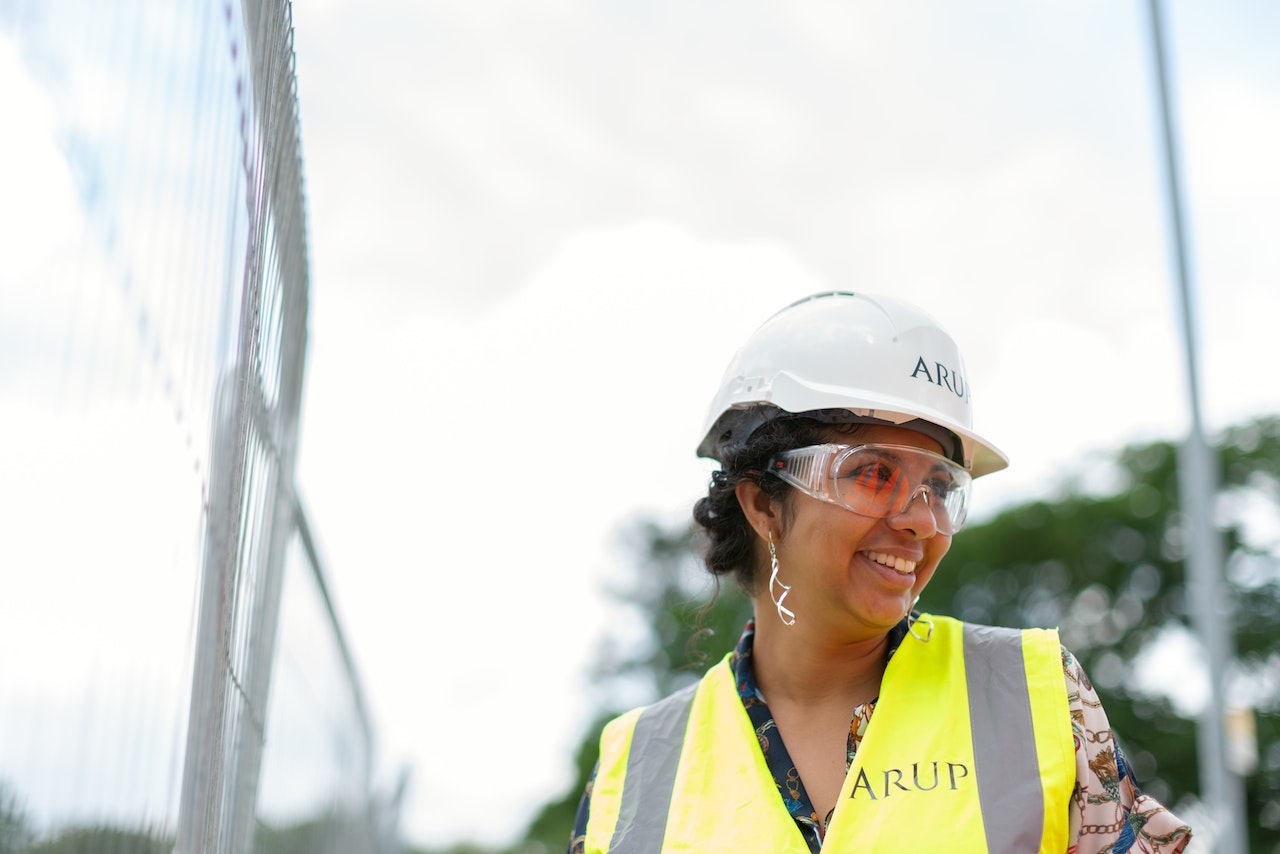
Why More Women Are Joining the Construction Industry

Why More Women Are Joining the Construction Industry

Surety Bond Professionals is a family owned and operated bonding agency with over 30 years of experience. With access to a broad range of surety markets, our expert agents are ready to assist with all of your construction bond needs. Why Are Women Increasingly Seeking Employment in Construction? This question has a one-word answer: opportunity. More specifically, women are attracted by the range of career options, income potential, and opportunities for advancement in construction today. Additionally, societal attitudes toward women in traditionally male occupations have changed significantly in recent decades. Let’s take a closer look at these factors and how they have led to the current influx of women in the construction industry. Employment Opportunities With the billions of dollars the Infrastructure Investment and Jobs Act (IIJA) is pumping into the construction industry, a 2022 estimate places the 2023 demand for skilled workers in the construction trades at 590,000 in addition to the normal pace of hiring. The aging of the U.S. construction workforce and a decrease in the number of young people choosing a career in construction is making it hard for construction companies to recruit enough new workers. The number of construction workers between the ages of...

Read more
Why Are Women Important in Construction?

Why Are Women Important in Construction?

Surety Bond Professionals is a family owned and operated bonding agency with over 30 years of experience. With access to a broad range of surety markets, our expert agents are ready to assist with all of your construction bond needs. The Construction Labor Shortage The current labor pool for construction jobs is too small to meet the demand for construction workers. With nearly twice as many job openings as people seeking employment in the construction industry, recruiting more women to meet that demand makes good sense simply from a numerical standpoint. It will take about 590,000 new construction workers to meet the demand anticipated for 2023. Women can certainly help to make up for the shortfall. Benefits of Increasing Gender Diversity in Construction The current labor shortage is only one of the reasons why it’s important to have more women in construction. There are other significant benefits. Creativity and Innovation Gender diversity adds another point of view to any discussion, which in turn increases creativity and innovation. Research has shown that groups that include women are better at collaborating and innovating than male-only groups. Effective Communication Nature has given women an advantage when it comes to communicating. Research reported...

Read more
What You need to Know—2023 Women in Construction Conference

What You need to Know—2023 Women in Construction Conference

Surety Bond Professionals is a family owned and operated bonding agency with over 30 years of experience. With access to a broad range of surety markets, our expert agents are ready to assist with all of your construction bond needs. When and Where Will the 2023 Conference Be Held? The 2023 annual conference of the National Association of Women in Construction (NAWIC) is scheduled for August 9-12 in Portland, Oregon. This will be NAWIC’s 68th annual conference. NAWIC’s stated purpose is to strengthen and amplify the success of women in the construction industry, and its annual conference plays an important role in carrying out that mission. NAWIC Membership To join NAWIC, you must be a woman working in some capacity in the construction industry for 20 or more hours per week. That includes project management, administrative, legal, insurance, or financial work or employment in any of the construction trades. The only other requirement to join as a voting member is to hold membership in one of NAWIC’s chapters. Currently, there are more than 115 chapters spread across 47 states, divided into eight regions: Northeast, South Atlantic, Southeast, North Central, Midwest, South Central, Pacific Northwest, and Pacific Southwest. Women who...

Read more
What Percentage of Construction Workers Are Female?

What Percentage of Construction Workers Are Female?

Surety Bond Professionals is a family owned and operated bonding agency with over 30 years of experience. With access to a broad range of surety markets, our expert agents are ready to assist with all of your construction bond needs. What Percentage of Construction Workers Are Female?: 2022 Statistics In September 2022, approximately 7.7 million people were employed in the U.S. construction industry. According to the Bureau of Labor Statistics, approximately 14% of construction workers in October 2022 were female. Both the number of women working in the construction industry and the number of construction-related companies owned by women have increased since 2014, despite some disruptions due to the Covid-19 pandemic. As of 2020, Hispanic women outnumber White women working in construction in the United States. This segment of the construction workforce grew by 117% between 2016 and 2020. Most Hispanic women entering the construction workforce do so in job site positions, not office jobs. States with the Most and the Least Women in Construction Though not technically a state, Washington, D.C. has the most women employed in construction (17.6%). In order, the remaining states in the top five are Arizona, Florida, Washington, and Oregon. This can be useful...

Read more
What is the National Association of Women in Construction?

What is the National Association of Women in Construction?

Surety Bond Professionals is a family owned and operated bonding agency with over 30 years of experience. With access to a broad range of surety markets, our expert agents are ready to assist with all of your construction bond needs. Origin of the National Association of Women in Construction Historically, construction has been male-dominated. In 1953, the relatively small number of women working in construction in the Fort Worth, Texas area felt a need to support and be supported by their female peers. That need for networking and support resulted in the formation of Women in Construction. It soon became apparent that all over the country, women trying to make a place for themselves in the construction industry would benefit greatly from an organization like Women in Construction. And in May 1955, Women in Construction revised its charter to add chapters throughout the U.S., changing the organization’s name to The National Association of Women in Construction (NAWIC). There are now more than 115 NAWIC chapters located in 47 states, organized into eight regions: Northeast, South Atlantic, Southeast, North Central, Midwest, South Central, Pacific Northwest, and Pacific Southwest. NAWIC is affiliated with NAWIC organizations in other countries, including Australia, New...

Read more
Statistics on Women in Construction

Statistics on Women in Construction

Surety Bond Professionals is a family owned and operated bonding agency with over 30 years of experience. With access to a broad range of surety markets, our expert agents are ready to assist with all of your construction bond needs. Women Historically Have Been Underrepresented in Construction There is documentation of women working as construction laborers in the 13th century, but for centuries after that, there is little evidence of women construction workers, at least not in significant numbers. Some believe that the lack of historical statistical data on women in construction is simply due to the very small number of women doing construction work. Others think that women had such low social status outside of the nobility that they weren’t worth mentioning in the historical record. For most of the first millennium, women who worked outside of the home did so primarily out of economic necessity. Poor single women and widows with no husband or extended family they could rely on for support had few options for making money. For the most part, they were regarded as a burden on society and were even regarded as somehow being responsible for the dire circumstances in which they found themselves....

Read more